


To discuss the suitability of Sedation Dentistry for your child, please contact us.

Some children may need more TLC (Tender Loving Care) to set them up for successful dental appointments or dental treatments.
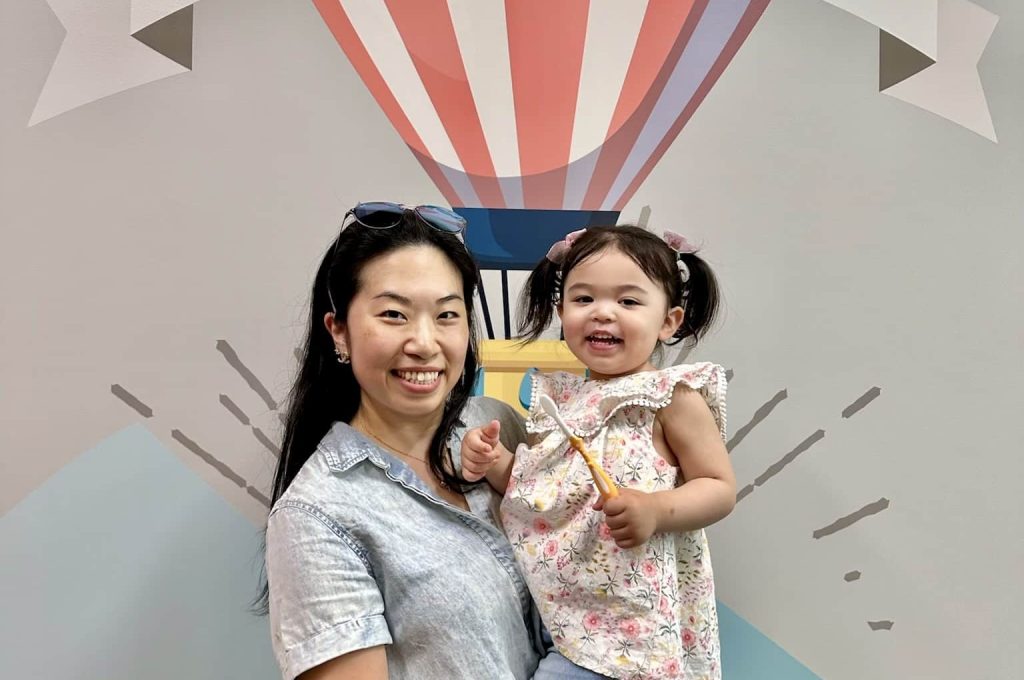
Dr Betty provides Sedation Dentistry parents can trust. She will always consult with you, the parent, about the best way to help give your child the attention and treatment they need to make them feel absolutely comfortable during procedures. Below are some of the Sedation Dentistry options you can consider.
It’s also known as “happy air” or “laughing gas.” Dr. Betty may recommend this option if your child is concerned about restorative treatments such as an extraction, filling, or crown.
Nitrous Oxide has been used for a long time in pediatric dentistry, and is a perfectly safe, mild, and effective sedative. It contains nitrogen and oxygen, both of which are present in the air we breathe every day. In dentistry, it’s delivered in a concentrated dose which relaxes your child and minimizes their gag reflex. Both of these factors help make their treatment safer and more effective and will also reduce the amount of time the treatment takes.
This is a moderate form of sedation that can help children who are anxious about their dental treatment, or who might not be able to sit still during their appointment. Oral Conscious Sedation allows the child to feel very relaxed, sometimes sleepy but they usually stay awake and watch TV peacefully while dental treatment is being completed. It enables more treatment to be achieved at one visit, thus fewer visits to Clover Kids Dentistry for you.
If Oral Conscious Sedation is not an option, or if your child has multiple treatment needs or is extremely anxious at the prospect of visiting the dentist, General Anesthesia could be the correct form of sedation. Your child will be able to sleep through their entire treatment under the watchful eye of the medical anesthesia team. Several or all procedures can be carried out, saving you and your child from having to make multiple trips to our office.
To discuss the suitability of Sedation Dentistry for your child, please contact us.
For pediatric dental sedation, children typically need to stop solid food 6–8 hours before the appointment, formula or non-human milk 6 hours before, breast milk 4 hours before, and clear liquids like water 2 hours before. Exact timing depends on the sedation level and your child’s age, so follow the written instructions the dental team provides.
Laughing gas (nitrous oxide) side effects in kids are usually mild and very short-lived — most commonly nausea, giggling, lightheadedness, tingling, or a brief headache. These typically clear within 3–5 minutes after the gas is turned off and the child breathes pure oxygen, letting most kids return to school and normal activities the same day (ADA).
Most children recover the noticeable effects of oral conscious sedation within 4–6 hours, though grogginess, unsteadiness on their feet, or emotional swings can linger for up to 24 hours. Kids should be closely supervised the rest of the day and typically return to school the following day (AAPD).
Oral conscious sedation is stronger than laughing gas. Nitrous oxide (laughing gas) is minimal sedation, the child stays fully awake, alert, and responsive, and effects wear off within minutes. Oral sedation is moderate sedation, the child may be very drowsy or lightly asleep but still responsive to voice or touch, and effects last several hours (AAPD).
There is no strict minimum age for pediatric dental sedation. Nitrous oxide typically works well from around age 3–4, once a child can wear the nose mask cooperatively. Oral sedation and general anesthesia may be used at younger ages when medically necessary, but only after the pediatric dentist evaluates the child’s health history, weight, and airway (AAPD).
In most cases, children can eat normally right after nitrous oxide, it wears off within minutes once the gas is stopped and pure oxygen is given at the end. However, if your child also received local anesthetic (numbing) or had a procedure like a filling or extraction, those factors, not the gas itself, determine when and what they can eat.
Sedation is usually considered when a child cannot safely and comfortably complete treatment due to severe anxiety, a strong gag reflex, very young age combined with extensive work needed, or special medical or developmental needs. If your child has had a traumatic past dental experience or needs multiple procedures in one visit, ask the pediatric dentist to discuss options (AAPD).
Yes, dental sedation is often a safe and helpful option for children with autism, ADHD, or sensory processing differences, sometimes making necessary dental care possible when a traditional visit would be overwhelming. The pediatric dentist carefully reviews the child’s medications, medical history, and sensory needs first, since some behavioral or ADHD medications can interact with sedation drugs (AAPD).
Stop in or call our office to meet Dr. Betty and tour our
facility. She’s on a mission to nurture healthy smiles for
life, and provide non-judgmental, affordable, pediatric
dental services, with a particular focus on preventive
dentistry and patient/parent education.